

For equity mutual funds, there are usually two options in front of them –
“Should I invest in established big companies or seek the higher potential for growth in little companies?” That is where Small Cap Funds enter the frame. These funds have a high-risk, high-return nature and are suitable only for investors willing to hold on for long hauls for long-term returns.
In this article, we’ll break down everything you need to know about Small Cap Mutual Funds – meaning, features, benefits, risks, taxation rules, and more.
A Small Cap Fund is an equity mutual fund that invests predominantly in stocks of small-cap companies.
According to the Securities and Exchange Board of India (SEBI) guidelines:
👉 Simply put, small-cap funds invest in the budding stars of the stock exchange – companies that are small now but could grow into giants in the coming future.

| Small cap funds are ideal for investors who: |
|---|
| Have a long-term investment horizon (at least 5–7 years). |
| Can handle short-term market fluctuations without panic. |
| Are looking to build wealth through disciplined SIP investments in high-growth companies. |
| Want to diversify their portfolio beyond large and mid-cap exposure. |
| In short, small cap funds are best for investors with patience, long-term goals, and an appetite for volatility. |
Small Cap Mutual Funds are typically benchmarked against indices that track the performance of smaller, emerging companies. The most commonly used benchmark in India is the Nifty Smallcap 250 TRI (Total Return Index), which includes the 250 companies ranked after the top 250 listed stocks by market capitalization.
This benchmark helps investors measure how well a small cap fund performs compared to the broader small cap segment of the market. Some fund houses may also use other benchmarks like the S&P BSE SmallCap TRI, depending on their stock universe and strategy.
| Time Horizon | Return |
|---|---|
| 1 Year | -8.82% (31 Oct 2025) |
| 5 Years | 28.23% (31 Oct 2025) |
| Since Inception | 16.06% (31 Oct 2025) |


1. These are very volatile and sensitive to changes in the market.
2. During a bull run, they are capable of making benchmark-beating returns, but in a downslide in the market, they could fall sharply.
1. It takes years for businesses to grow.
2. Investors must remain invested for at least 8–10 years to unlock the full potential of these funds.
Even a small allocation to small-cap funds in your portfolio can significantly boost long-term wealth, provided you stay invested.
These funds provide exposure to businesses from industries that often are not included in large- or mid-cap funds.
No investment is risk-free — Small cap funds carry their own set of risks, and you should be aware:
| Market Risk | Long Gestation Period | High Volatility | Liquidity Risk |
|---|---|---|---|
| A bear market usually witnesses the maximum decline in small-cap funds. | These funds take time to deliver results. Short-term investors may be disappointed. | Stock prices of small-cap companies swing more than large-cap or mid-cap firms. | Since small-cap stocks are less frequently traded, buying and selling may be affected. |
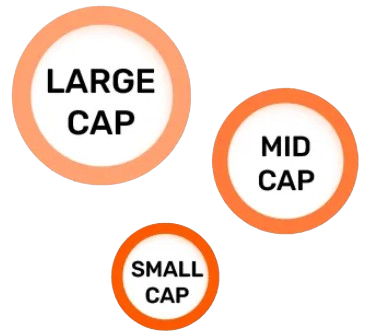
| Fund Type | Risk Level | Return Potential | Suitable For | Investment Horizon |
|---|---|---|---|---|
| Large Cap | Low | Moderate | Conservative investors | 3–5 years |
| Mid Cap | Moderate | High | Moderate risk-takers | 5–7 years |
| Small Cap | High | Very High | Aggressive investors | 7+ years |

A Small Cap Mutual Fund invests at least 80% of its assets in small-cap stocks – companies with market capitalization of less than ₹5,000 crore.
Yes. These are extremely volatile and are highly risky investments. Yet, in the long run, they can provide outstanding returns.
Ideally, for 8–10 years to allow small companies enough time to grow.
Short-term traders, conservative investors, or those in need of stability should avoid these funds.
Mid Cap Funds: invest in mid-sized companies (ranked 101–250 by market cap).
Small Cap Funds: invest in companies below the 250th rank.
They are riskier but carry higher potential returns.

Small Cap Mutual Funds are a great wealth-generation tool for long-term players willing to accept short-term volatility in stride. When properly allocated, patiently, and disciplinarily, these funds can make you part of India’s growth revolution through emerging businesses.
But remember:
Disclaimer
This article is for informational purposes only and does not constitute financial advice. Before investing, you should consult a qualified financial advisor, consider your risk tolerance, investment horizon, and review the latest scheme documents, factsheet and disclosures from Mutual Fund.
📅 Last Updated on: November 3, 2025
 Sushil Bajaj
 Abakkus Large & Mid Cap Fund NFO 2026 | Invest Online Overview Strategy Portfolio Performance FAQs Invest Now Abakkus Large & Mid Cap Fund NFO Period: Jul 15, 2026 – Jul 29, 2026 | Large & Mid Cap Investment Objective: To generate long-term capital appreciation through a portfolio predominantly invested in equity and equity related […]
Baroda BNP Paribas Services Fund NFO | Invest Online Overview Strategy Portfolio Performance FAQs Calculator Invest Now Baroda BNP Paribas Services Fund – NFO 2026 NFO Period: July 14 – July 28, 2026 | Category: Thematic – Services Actively managed equity fund targeting long-term capital appreciation from companies engaged in the services theme. Invest in […]
© Copyright 2025 - All Rights Reserved | Website developed by Behind Methods Co.
 +91 931-5120-004
